
Democratia-Aqua-Technica
This spot is located here
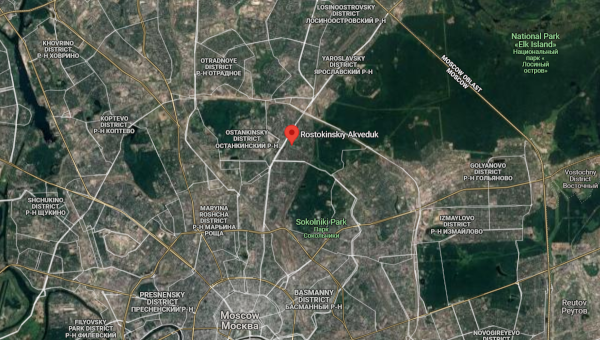
Rostokino Aqueduct
The main landmark of the Rostokino district is the stone aqueduct, the one of the five aqueducts of the Mytishchi water pipeline that has survived to this day. Water was supplied to the city from Mytishchi springs without any mechanical water lift, using the elevation differences and a number of engineering solutions.
The aqueduct is 356 meters long and about 19 meters high. The Rostokinsky Aqueduct which is a unique structure with 21 arcs over the Yauza River. At the time, it was topped with a metal-covered trough to carry the water.
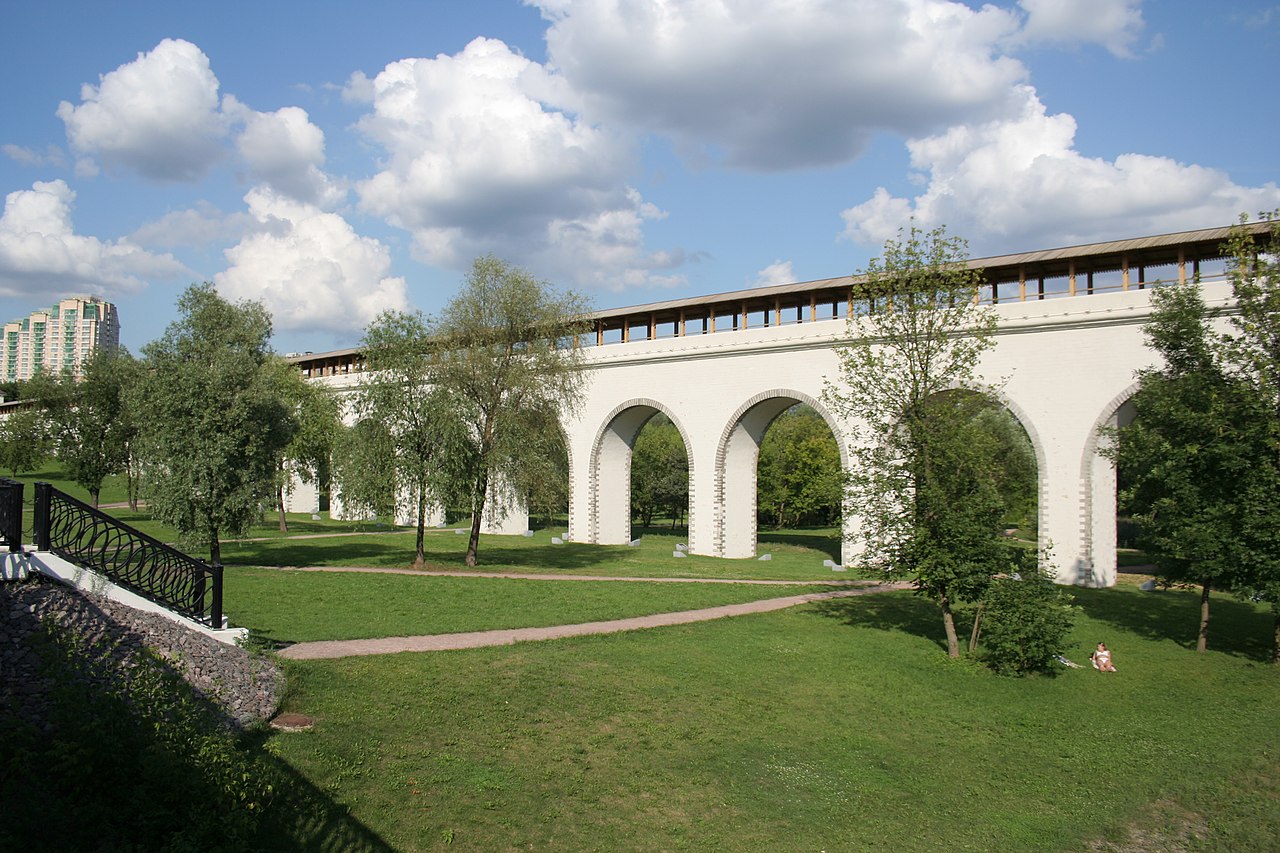
Source: © A.Savin, WikiCommonshttps://commons.wikimedia.org/wiki/User:A.Savin
Task: Rostokino Aqueduct
In the middle of the 19th century, a cast-iron pipe was installed in the gutter, and water was supplied by pumps, which almost doubled the supply capacity. In early 20th century, two cast-iron pipes were installed in the aqueduct, through which water was supplied to Moscow until 1962. The structure was later used as a main heating system. Only in 2008, after reconstruction and restoration, the Rostokino aqueduct became a pedestrian bridge and was recognized as a cultural heritage site of federal significance.
Fill in the blanks: Rostokino Aqueduct is a main landmark that cost a huge amount of money. It is often called the Million Bridge, because _______? Click on the button of your choice to see if the solution is correct.